Gameplay systems
Anime Expeditions Gameplay and Systems Guide
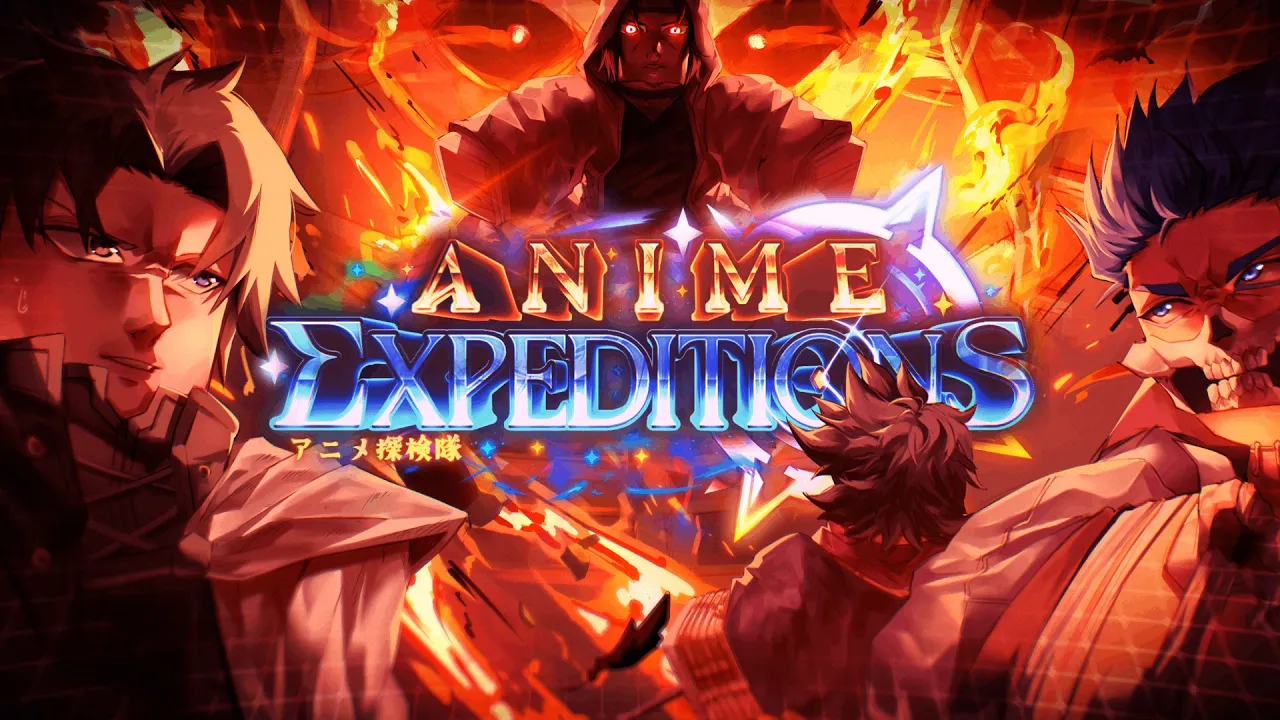
Anime Expeditions is an anime-inspired tower defense experience on Roblox developed by Expeditions Entertainment. Players summon units, build teams, clear waves of enemies, evolve their strongest characters and prepare for Story, Expeditions, Raids and time-limited event systems such as Update 0.5. This guide explains the Update 0.5 event loop, level 20 Expeditions route, level 25 Raid milestone, equipment layer, and Beginner's Path while keeping unverified rates and rewards clearly labeled.
Anime Expeditions gameplay FAQ
What type of game is Anime Expeditions?
Anime Expeditions is presented on its official Roblox listing as an anime-inspired tower defense experience. The confirmed high-level loop includes summoning units, leveling and evolving them, building teams, fighting enemy waves and bosses, entering multiple modes, and playing with friends.
What should an Anime Expeditions team include?
Start with one dependable damage dealer, then add support or control that solves the current stage failure. An economy unit can help in longer runs when it repays its placement and upgrade cost. The exact best composition depends on the stage, enemy immunity, placement rules, and the units actually owned.
How do I know why a stage failed?
Early leaks suggest a coverage, placement, attack-cycle, or control problem. A boss surviving the timer suggests insufficient focused damage or amplification. Slow upgrades suggest poor in-stage spending or economy. A mechanic that disables or bypasses units cannot always be solved by adding more raw damage.
Are Raid and Expedition rewards listed here?
Current-client guides consistently report that Expeditions unlocks at player level 20 and Raids at level 25, with Spirit City as the current Raid area. Exact drop rates, entry costs, reward totals, and future stage changes remain provisional unless they are visible in the current client.
Can I use this guide after a game update?
The decision framework remains useful, but time-sensitive rules must be checked again. Balance patches can change damage, attack speed, range, costs, placement limits, status immunity, mode access, banner pools, and evolution recipes. Use the page review date and Updates page as starting points, then confirm the current client.
What gameplay was added in Anime Expeditions Update 0.5?
Current Update 0.5 coverage reports a limited Villain Invasion map with four acts, a Villain Banner, event quests, shop, and Event Battle Pass; Villain Hunt encounters in non-competitive modes; and a daily Bounty Board. Exact caps, rates, rewards, and recipes remain provisional until confirmed in the current client.
The core gameplay loop
The confirmed loop is straightforward: obtain units, develop the roster, assemble a team, defend a route against waves, defeat bosses, and use progression rewards to prepare for harder content. Each system should serve the next playable objective. Summoning without a roster goal, upgrading units that are not deployed, or rerolling traits before the team is stable can consume resources without improving a clear.
- Obtain: read the current summon interface and collect rewards with clear evidence.
- Build: assign damage, support, control, and optional economy jobs.
- Test: use the next Story stage, Expedition, Raid, or boss as the benchmark.
- Improve: spend only on the system connected to the measured failure.
Update 0.5 event loop
The Villain Invasion update adds a limited route around event acts, Villain Hunt encounters, and daily bounties. Treat the live event interface as the authority for timers, access, rewards, banner pools, and spending rules.
- Clear Villain Invasion Acts 1, 2, 3, and Final to advance the event route shown by the client.
- Use the limited Villain Banner, event quests, shop, and separate Event Battle Pass only after reading the visible costs and timers.
- Defeat villains reported to spawn in non-competitive modes for Villain Chests and event resources.
- Check the Bounty Board each day; Gold rerolls and Event Coin rewards are reported, while exact daily caps remain provisional.
What to do first in Villain Invasion
Begin with the permanent-value checks before committing limited currency. Open the event panel, read its end time, clear the available acts, inspect the Villain Banner pool and pity wording, and compare bounty objectives with modes you can already clear.
- Claim visible event quests and bounties before repeating an inefficient farm.
- Use Villain Hunt during ordinary non-competitive progression when the extra target does not jeopardize the clear.
- Confirm every evolution recipe in the current client before spending limited materials.
- Keep exact drop rates, daily limits, and reward totals provisional unless the client displays them.
Summoning and roster building
Summoning expands the available roster, but rarity alone does not identify the next useful pull. Read the banner pool, displayed rates, pity counter, currency requirement, timer, and any carry-over wording in the current client. Keep a unit when it fills a missing role or materially improves the current role holder. Do not assume a community-reported pity value applies to every banner or survives a balance update.
Unit development systems
Leveling, ordinary upgrades, traits, stat potential, equipment, and evolution affect different layers of a unit. Levels and upgrades are the safest early investment when the unit already clears content. Traits and rerolls are optimization layers for durable roster members. Equipment should reinforce the unit's actual mechanic. Evolution deserves the strongest evidence standard because recipes can consume limited materials and may change between builds.
Beginner's Path and Beginner Banner
Current-client guides show Beginner's Path as the intended early progression route. Its opening objectives introduce major systems and provide Beginner Tickets plus early resources. Use those tickets on the Beginner Banner before spending ordinary Gems without a roster goal; exact reward totals and pity values should still be read from the current client.
Equipment and rerolls
Standard equipment supplies general stat improvements, while unit equipment is tied to a specific evolved unit and can add a unique passive. Fill useful empty slots before chasing perfect rolls. Save Equipment Rerolls and Locks for pieces that will remain on a core unit, and confirm the displayed stat ranges before spending.
Team roles and damage coverage
A functional team is built around jobs. A damage dealer removes most wave or boss health. A support unit improves allies through amplification or another compatible effect. A controller creates time through Slow, Stagger, Stun, rewind, walls, or similar mechanics. An economy unit trades early combat strength for additional in-stage currency. Some reported units combine several jobs, but that does not remove their setup cost or stage dependence.
Waves, placement, and upgrade timing
Wave performance depends on where a unit can cover the path, how quickly it attacks, which area shape it uses, and when upgrades are purchased. Place the first damage option where it can affect meaningful path distance rather than only the spawn point. Add control where the team can exploit the delay. Concentrate early upgrades on the unit doing the main work instead of spreading currency evenly across unfinished placements.
Bosses and failure diagnosis
A boss attempt should produce a diagnosis. If normal waves reach the exit first, the team needs coverage or control before more boss damage. If the route is stable but the boss survives the timer, improve focused damage, amplification, uptime, or upgrade order. If a status effect fails, check immunity rather than assuming the unit is broken. Compare runs under the same stage and investment conditions.
Expeditions, Raids, and other modes
Current-client guides consistently place Expeditions at player level 20. The mode uses a moving Payload route and an Expedition area with upgradeable structures such as resource production, unit training, a shop, and an Armory. Raids unlock at level 25, with Spirit City reported as the current Raid area. Update 0.5 adds Villain Invasion, Villain Hunt, and Bounty Board activity beside those permanent routes. Read the live mode interface for stage rules, matchmaking, costs, drops, pity, and reward totals because those values can change.
Co-op team planning
Co-op lets players combine rosters, but party limits, shared economy rules, reward allocation, and scaling still require verification. Coordinate jobs before the run: decide who opens the path, who carries wave damage, who handles the boss, and who brings control or amplification. Avoid duplicating an expensive specialist when the team is missing basic early coverage. Treat another player's unit as support for the plan, not proof that an isolated tier ranking is universal.
Resource flow and spending order
Use each resource for the bottleneck it can actually solve. Gems and summon tickets address roster access. Upgrade resources strengthen an owned unit. Trait Crystals change traits. Stat and Equipment Locks preserve desirable outcomes during optimization. Evolution materials belong to a verified recipe. In-stage Yen determines placement and upgrade timing during a run and should not be confused with account-level summon currency.
Current availability
Anime Expeditions is publicly playable on Roblox. On July 31, 2026, the official game API showed Anime Expeditions [UPDATE 😈]. The official event API lists the Update 0.5 window through August 1 at 4:00 PM UTC and an Update 1.0 window from August 7 to August 21; confirm the current banner and timer in game because schedules and server availability can change. Availability can change independently from the page's content date, so open the official Roblox destination before planning a session or treating a third-party status post as current.
Related guides
Anime Expeditions Wiki is an independent fan-made resource and is not affiliated with Roblox or Expeditions Entertainment. Game information may change between updates.